
Teaching Offer - Hill Campus
Our School Ethos - Teaching within an Embedded Transdisciplinary Offer
This offer should be read in conjunction with the Sherwood Foundation School’s Wellbeing and Therapy Offers. For further details on the teaching curriculum please read in conjunction with the curriculum documents. Teachers and teaching staff at Sherwood Foundation School (Sherwood Hill Campus) work in a trans-disciplinary way as an integral part of the school team to meet the teaching provision requirements and outcomes of the EHCPs for all children and young people within the school. The transdisciplinary model of practice aims to provide more family-centred, coordinated, and integrated services to meet the complex needs of children with disabilities and their families. Transdisciplinary work seeks to develop holistic provisions by integrating different disciplinary perspectives and strategies, thereby creating new frameworks to understand problems for the purposes of developing more effective solutions.
Our teaching team works together with the wellbeing and therapy staff at all levels of our school to enable a trans-disciplinary approach. This ensures that the people around the child/young person share skills, use consistent approaches and are equipped to effectively deliver the universal and targeted services described below. This also ensures the work of all disciplines is fully considered and embedded within the curriculum and day to day running of the school. This model of working enables specialist teaching, wellbeing and therapeutic interventions to be moved effectively to targeted and universal options in order that the team around the child can better support the individual. This also ensures continuous growth of the whole school community, enabling us to adapt alongside best-practice developments.
Introduction to Our Teaching Teams
The teaching team consists of specialist teachers, senior teaching assistants (STA), teaching assistants (TA) and lunch time support assistants (LTA) based in class teams across the Sherwood Hill Campus. The teams are split between our lower, middle and upper school which are led by teaching wider leaders who work under the guidance and leadership of our Assistant Head and Head of School, Beth Brookes. The teachers work closely with the therapists attached to their class, and with the support of the wellbeing team in order deliver our trans-disciplinary offer.
The teaching team prioritises close collaboration with parents / carers, offering termly parents evening to capture the lived experience of our students in their home lives and ensure targets capture their emergent needs across all settings. We work closely with the NHS nurses and have access to community NHS services such as SaLT for dysphagia needs and physiotherapists. The team works closely with other outside agencies including Child and Adolescent Mental Health Service (CAMHS), social care, Mencap and respite services.
Our Teaching Approaches
At Sherwood Foundation School: Hill Campus we follow a holistic, relationship based, strengths and process focused teaching approach, where children/young people and families are central to all decisions made in relation to assessment and intervention. Our aim is to work in a trans-disciplinary way to collaborate with parents, school staff and outside agencies to enable the child/young person to achieve highly individualised outcomes that are focused around leading full and happy lives, realising potential and becoming valued members of their community. This is achieved through teachers working alongside families, therapists, wellbeing practitioners and outside agencies to embed teaching outcomes and interventions into meaningful, functional activities within the home and school environment.
The Sherwood Foundation School: Hill Campus teaching team have a wide range of knowledge and clinical experience, and specialise in working with children with complex needs including but not limited to; vision and hearing impairment, autism, ADHD, cerebral palsy (CP), epilepsy, Down syndrome, Angelman’s syndrome and other genetic or chromosomal conditions.
All staff receive training in the school’s child centred, trans-disciplinary approach to learning as part of their induction package as well as yearly updates on the latest evidence based autism best practice. Regular training and a tiered continuous professional development plan for teaching staff ensures that every member of staff continues to develop their skills in using a range of specialist interventions and approaches. This enables them to effectively develop and adapt the highly individualised provision maps of each learner throughout their time in the school.
Some of the approaches that we utilise to specifically support the needs of our autistic learners are:
- The Curiosity Approach
- Attention Autism
- TEACCH
- Studio III
- Intensive Interaction
- DIR Floortime
Delivery of the Teaching Offer - Three Tier Model
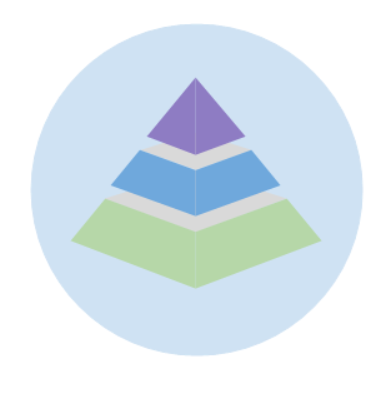
The Sherwood Foundation School: Hill Campus teaching, wellbeing and therapy services team provides support based on the widely recognised three tier model (Gascoigne, 2006). This is provided alongside the school’s core teaching offer, given that every child within the school has a high support needs and requires specialist provision outlined in their Education and Health Care Plan (EHCP) to varying degrees throughout their educational lives. This model is delivered within the context of a transdisciplinary approach and is described below.
Levels of Provision
| Specialist Provision |
|---|
|
Intervention delivered directly by a highly specialist member of the teaching team, wellbeing practitioner or therapist. High levels of 1:1 support are required at all times to support a learner to develop new skills in the moment and keep the child safe. |
| Targeted Provision |
|---|
|
Provision delivered by key members of school staff or parents who are specifically trained in the technique(s) by members of the teaching, wellbeing and therapy team. 1:1 teaching provision in order to support the learner to engage in learning within a class group. |
| Universal Provision |
|---|
| Provision delivered by all school staff and parents (where possible) to all children who attend our school. This offer is developed in collaboration with the school’s wellbeing and therapy team. |
| Core Provision |
|---|
| Core teaching support that is available to all children in the school to support statutory processes. |
Core Offer
All of our learners are viewed as having specialist level needs through their EHCP. The school’s core teaching offer surrounds our provision and is designed to ensure that every child and young person has access to the essential services they require to support statutory processes. This includes transdisciplinary input within: a detailed baseline assessment; reports to support annual review, including key stage transitions; termly target setting and review; teaching outcome measures; essential safeguarding and child and family in need support; liaison with parents, teachers and outside agencies; standard documents and profiles (e.g. risk assessments, My Voice - ‘All About Me’, Self Reg, communication profiles and where appropriate restrictive practice plans); and transition support including handovers between groups and classes.
Universal Provision
Our universal teaching provision has two areas of focus:
-
Our universal provision empowers school staff and parents to use a range of best practice teaching and therapy strategies and techniques embedded within daily routines to ensure high quality support for all children and young people at Sherwood Park.
This includes wellbeing support; promotion of communication and regulation friendly environments, techniques and strategies; whole school support and development (e.g. teacher, therapy and parent training, coaching and collaboration); teaching input within policies and documents; curriculum development, provision mapping and planning.
At this tier, the teaching staff work collaboratively with therapy staff staff, parents and external agencies, ensuring that we place regulation, engagement, communication, social skills, motor development and life skills at the heart of learning within our provision. All of our learners receive this level of support.
-
To provide staffing ratios that enable independence whilst achieving high aspirations for progress in learning
Staff provide this support with staffing ratios of 1:2 support.
Targeted Provision
Our targeted teaching provision has two aims:
-
To build learner capability through modelling specialist strategies and delivering more intensive interventions and programmes (these may be new to the learner / school).
This allows for embedding more individualised teaching and therapy strategies into the child/young person’s daily life. This supports new approaches and interventions to become universal within the whole school team over time and reduces the need for highly specialist provision. This includes:
- Interventions that have been established with the help of a specialist teacher, OT or SaLT but have become self sustaining within settings (e.g. regulation lessons, sensory circuits, visual supports)
- Strategies delivered by school staff or parents with ongoing support from the therapist (e.g. video modelling to develop independence skills, therapy programmes and modelling of AAC)
- Providing additional training to upskill the team/ parent for them to continue supporting the development of new skills in the learner/ group of learners
- Intervention from experienced teachers and the well-being team to assess, trial and monitor strategies that can be delivered by staff, assistants and/or parents.
All of our learners receive this level of support at different times and different levels of frequency/ intensity.
-
To enable a learner to safely access a class group in order to meet our high aspirations for their learning potential.
This level of targeted support is provided for learners who need in the moment support with their well-being, regulation, shared attention and engagement in order to access learning in a class group. This 1:1 targeted support from skilled staff is provided at times across the day to enable the learner to participate in group learning where otherwise they may become highly anxious, distressed, disengaged or be unable to communicate their needs effectively or physically participate. This level of support applies for learners who require additional 1:1 support to safely manage self care tasks or support transitions between equipment/ environments due to the extent of their physical/ medical needs or for learners who may also cause disruption to the learning of others.
Specialist Provision
Specialist provision is required for learners who have very high support needs and where universal and targeted provision cannot meet this need. This level of provision is provided with the aim of reducing the impact of the child or young person’s difficulties, whilst building the capabilities of the team to support them at a targeted or universal level in future where possible. Our specialist teaching provision has two aims:
-
To collaborate and develop bespoke, highly individualised, specialist transdisciplinary education delivery. This provision requires highly specialist teaching staff working with members of the wider team. This always involves:
- The development and use of highly specialist teaching and therapeutic interventions primarily focused on increasing feelings of safety within the learner, developing trusting relationships with adults and improving their capacity to engage and participate in learning across contexts.
- Specialist well-being support to improve well-being and reduce the learner’s anxiety & stress, reduce risks to the learner and / or those around them
- Working closely in collaboration with the family and within a wider multi-agency team.
Some learners receive this level of support at different times and different levels of frequency / intensity.
-
To support a learner to really feel safe in their environment and learn to develop trusting relationships with adults.
Teaching staff work directly with the learner in collaboration with the wellbeing and therapy team to provide highly specific, specialist and effective interventions in the moment, within the most appropriate environment, in order to support the development of regulation and communication skills, shared attention, self-occupancy and safe problem solving. This level of support requires 1:1 teaching at all times and sometimes 2:1 at times of crisis or to access the community safely.
Progress Monitoring
Progress is monitored in a range of ways including:
- Short and long term EHCP outcomes through progress monitoring, moderation and evidence for learning
- Review of assessment / outcome data at key stage transition reviews
- Learners voice (communicated verbally/AAC/visual supports and through increased well-being, engagement and more regulated emotions /responses)
- Parent/ caregiver voice through meetings and feedback
- Teacher’s voice – feedback on positive impacts
- Feedback from stakeholders e.g. caseworkers, CAMHS, social care, respite services
- Measuring outcomes based on number of incidences & use of physical intervention, changes in risk assessment, data, progress data via SLEUTH
- Teaching input into the school’s LEARN Risk, Provision, Progress Tracker
Areas for Further Development
Key areas for development of the teaching team are closely linked to the outcomes of our latest Ofsted Report (2024):
-
Ensure that the essential knowledge that pupils need to learn over time is set out for all pathways which enables all pupils to experience stretch and challenge
-
To continue to enhance the schools curriculum to ensure breadth and depth across all subjects to offer the same wealth of educational opportunities as mainstream peers
-
To implement the new school curriculum and assessment tools to continue to enhance the educational experiences of all pupils