
Sherwood Hill Campus Local Offer
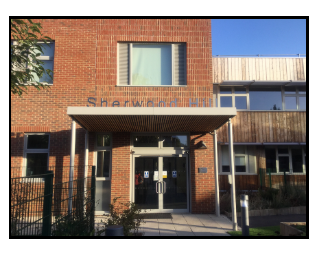
Name of School: Sherwood Foundation School - Sherwood Hill Campus
Address: Stanley Park Road, Carshalton, Surrey
Postcode: SM5 3HW
Name of Contact: Beth Brookes (Head of School)
Telephone: 0208 669 7832
Email: hilloffice@sherwoodpark.org.uk
Website: http://www.sherwoodpark.org.uk/
Contact to Discuss Child Needs
David Murden (Head Teacher)
Beth Brookes (Head of School - Sherwood Hill Campus)
Meg Smith (Assistant Head)
Anna Richardson (Head of Strategy & Transdisciplinary Working)
Referrals or requests for admission to Sherwood Park are undertaken by the Local Authority.
Visits to school are warmly welcomed and contact can be made through telephoning our reception which is open from 8.00 - 16:00. There are 6 open mornings per year, alternatively, you can arrange a visit. There are no set times for visits; we will try to accommodate parents’ preferences wherever possible.
About the School
Sherwood Foundation School is an all age special school, which consists of three campuses. Sherwood Park Campus in Wallington, which provides for pupils whose primary needs are profound and multiple learning disabilities and severe learning disabilities, some of whom are Autistic aged 3-19 years. Sherwood Hill Campus in Carshalton, which provides for pupils aged 4-19 years where their Autism has a significant or profound impact on their learning and/ or social and emotional skills, affecting their capacity to cope across daily activities. Sherwood Manor Campus provides for secondary learners who are aged 11-19.
(Good rating: Ofsted, 2018)
Sherwood Foundation School prides itself on its individualised, trans-disciplinary approach to learning; with the child/ young person and their family at the heart of our practice. We are dedicated to using strengths based, relationship focused, developmentally appropriate, person-centred practices (information on these can be found on our website) to support the learning and growth of our pupils. We aim to create a school culture and learning environment that facilitates the active engagement and participation of our learners, using motivating and meaningful activities that support the development of regulation, communication, social skills, cognitive abilities and life skills in preparation for adulthood.
All learners attending the school have an Education Health and Care Plan (EHCP) which identifies the school as the most appropriate provision for the student. This also identifies the students primary needs and where appropriate additional needs. We work hard to ensure the pupil and parent voice is captured effectively at annual review and transition reviews ensure that the EHCP continues to reflect the student’s current strengths, aspirations, needs & requirements for provision. There is an exception for our nursery students on our Sherwood Park Campus who may start at our school prior to their EHCP being finalised.
On the Sherwood Hill Campus we have three pathways for Autistic learners. We have 12 classes (13 if we have a bulge class), the majority of which have mixed ages and are grouped by learning style and ability linked to their appropriate learning pathway. This ensures that our learners are working alongside a suitable peer group, are able to access the appropriate curriculum for their needs and that their work is differentiated to enable sustained progress.
Ofsted 2018 reported:
‘The Leadership team has maintained the good quality of education in the school since the last inspection’
Supporting Children
All staff at Sherwood Foundation School are supported to work within our LEARN ethos which embodies our values and vision to ensure best practice is achieved within our school every day:
Listening and responding to the voices of everyone in our community and beyond
Enabling our learners and the whole school community to be the best they can be.
Accepting and celebrating individual differences and neurodiversity
Respecting all in our community in all areas of their life and learning
Nurturing individuals to develop autonomy and independence
LEARNing is everywhere at Sherwood Park School
All of our children have an Education Health and Care Plan and often have a number of dedicated professionals from multiple agencies working with them in order to support them to reach their potential.
Our School Values - An Embedded Trans-disciplinary Offer
This offer should be read in conjunction with the Sherwood Park teaching, wellbeing and therapy offers. Teachers and teaching staff at Sherwood Foundation School work with wellbeing and therapy staff in a trans-disciplinary way as an integral part of the school team to meet the provision requirements and outcomes of the EHCPs for all children and young people within the school. The transdisciplinary model of practice aims to provide more family-centred, coordinated, and integrated services to meet the complex needs of children with disabilities and their families. Transdisciplinary work seeks to develop holistic provisions by integrating different disciplinary perspectives, thereby creating new frameworks to understand problems for the purposes of developing more effective solutions.
Our teaching team works together with the wellbeing and therapy staff at all levels of our school to enable a trans-disciplinary approach. This ensures that the people around the child/young person share skills, use consistent approaches and are equipped to effectively deliver the universal and targeted services described below. This also ensures the work of all disciplines is fully considered and embedded within the curriculum and day to day running of the school. This model of working enables specialist teaching, wellbeing and therapeutic interventions to be moved effectively to targeted and universal options in order that the team around the child can better support the individual. This also ensures continuous growth of the whole school community, enabling us to adapt alongside best-practice developments.
Ofsted 2018 reported:
‘Inspectors saw strong examples of therapy being integrated into lessons……...Strong leadership has ensured that additional therapies are integrated well into the curriculum and this is a clear strength of the school’
Delivery of the Teaching Offer - Three Tier Model
The Sherwood Foundation School teaching, wellbeing and therapy services team provides support based on the widely recognised three tier model (Gascoigne, 2006). This is provided alongside the school’s core teaching offer, given that every child within the school is already recognised as having a highly specialist level of need and requires specialist provision outlined in their Education and Health Care Plan (EHCP) to varying degrees throughout their educational lives. This model is delivered within the context of a transdisciplinary approach and is described below.
Levels of Provision

| Specialist Provision |
|---|
|
Intervention delivered directly by a highly specialist member of the teaching team, wellbeing practitioner or therapist. High levels of 1:1 support are required at all times to support a learner to develop new skills in the moment and keep the child safe. |
| Targeted Provision |
|---|
|
Provision delivered by key members of school staff or parents who are specifically trained in the technique(s) by members of the teaching, wellbeing and therapy team. 1:1 teaching provision in order to support the learner to engage in learning within a class group |
| Universal Provision |
|---|
| Provision delivered by all school staff and parents (where possible) to all children who attend our school. This offer is developed in collaboration with the school’s wellbeing and therapy team |
| Core Provision |
|---|
| Core teaching, wellbeing & therapy support that is available to all children in the school to support statutory processes. |
Core Offer
The school’s core teaching, wellbeing and therapy offer surrounds our provision and is designed to ensure that every child and young person has access to the essential services they require to support statutory processes. This includes transdisciplinary input within: a detailed baseline assessment; reports to support annual review, including key stage transitions; termly target setting and review; teaching wellbeing and therapy outcome measures; essential safeguarding and child and family in need support; liaison with parents, teachers and outside agencies; standard documents and profiles (e.g. risk assessments, My Voice - ‘All About Me’, well-being plans and regulation and communication profiles) and transition support including handovers between groups, classes and external providers.
Universal Provision
Our universal teaching, wellbeing and therapy provision has two areas of focus:
1. Our universal provision empowers school staff and parents to use a range of best practice teaching, wellbeing and therapy strategies and techniques embedded within daily routines to ensure high quality support for all children and young people at Sherwood Park.
This includes wellbeing support; promotion of communication and regulation friendly environments, techniques and strategies; whole school support and development (e.g. teacher, therapy and parent training, coaching and collaboration); teaching input within policies and documents; curriculum development, provision mapping and planning.
At this tier, the teaching staff work collaboratively with wellbeing and therapy staff, parents and external agencies, ensuring that we place regulation, engagement, communication, social skills, motor development and life skills at the heart of learning within our provision. All of our learners receive this level of support.
2. To provide staffing ratios that enable autonomy and independence whilst achieving high aspirations for progress in learning
Staff provide this support with staffing ratios of 1:2 support. Learners receiving this level of support make up approximately a third of our learners on our Sherwood Hill Campus.
Targeted Provision
Our targeted teaching, wellbeing and therapy provision has two aims:
1. To build learner capability through modelling specialist strategies and delivering more intensive interventions and programmes (these may be new to the learner / school).
This allows for embedding more individualised teaching, wellbeing and therapy strategies into the child/ young person’s daily life. This supports new approaches and interventions to become universal within the whole school team over time and reduces the need for highly specialist provision. This includes:
- Interventions that have been established with the help of a specialist teacher, wellbeing practitioner, an OT or SaLT but have become self sustaining within settings (e.g. regulation lessons, sensory circuits, communication systems, visual supports)
- Strategies delivered by school staff or parents with ongoing support from the teacher, wellbeing practitioner, therapist or health/social care colleague (e.g. attention autism, video modelling to develop independence skills, therapy programmes and modelling of AAC)
- Providing additional training to upskill the team/ parent for them to continue supporting the development of new skills in the learner/ group of learners
- Intervention from experienced teachers and teaching staff the well-being team or therapist to assess, trial and monitor strategies that can be delivered by staff, assistants and/or parents.
All of our learners receive this level of support at different times and different levels of frequency/ intensity.
2. To enable a learner to safely access a class group in order to meet our high aspirations for their learning potential.
This level of targeted support is provided for learners who need in the moment support with their wellbeing, regulation, shared attention and engagement in order to access learning in a class group. This 1:1 targeted support from skilled teaching staff is provided at times across the day to enable the learner to participate in group learning where otherwise they may become highly anxious, distressed or be unable to communicate their needs effectively. Without this level of support the learner may also cause disruption to the learning of others. This level of support also applies for learners who require additional 1:1 support to safely manage self care tasks or support transitions between equipment/ environments due to the extent of their wellbeing/ physical/ medical needs. This group makes up over a third of our learners on the Sherwood Hill Campus.
Specialist Provision
Specialist provision is required for learners who have a high level of need and where universal and targeted provision cannot meet this need. This level of provision is provided with the aim of reducing the impact of the child or young person’s barriers to learning, whilst building the capabilities of the team to support them at a targeted or universal level in future where possible. Our specialist teaching, wellbeing and therapy provision has two aims:
1. To collaborate and develop bespoke, highly individualised, specialist transdisciplinary education delivery. This provision requires highly specialist teaching staff, wellbeing practitioners and therapists working with members of the wider team. This always involves:
- The development and use of highly specialist teaching, wellbeing and therapeutic interventions primarily focused on increasing feelings of safety within the learner, developing trusting relationships with adults and improving their capacity to engage and participate with learning across contexts.
- Specialist well-being support to improve well-being and reduce the learner’s anxiety & stress, reduce risks to the learner and/ or those around them
- Working closely in collaboration with the family and within a wider multi-agency team.
Many learners receive this level of support at different times and different levels of frequency/ intensity.
2. To support a learner to really feel safe in their environment and learn to develop trusting relationships with adults.
Teaching staff work directly with the learner in collaboration with the wellbeing and therapy team to provide highly specific, specialist and effective interventions in the moment, within the most appropriate environment, in order to support the development of regulation and communication skills, shared attention, self-occupancy and safe problem solving. This level of support requires 1:1 teaching at all times and sometimes 2:1 at times of crisis or to access the community safely. This group makes up approximately a third of our learners on the Sherwood Hill Campus.
Ofsted 2018 reported:
‘During the inspection, pupils said that they enjoy coming to school and are happy…...Relationships between pupils and staff are strong…….In most classes, we saw that pupils had opportunities to learn as independently as possible because teachers had ensured that resources were well organised’
Assessing Children
When our learners start with us at Sherwood Foundation School we complete a trans-disciplinary assessment within the first term. This involves collaborative working between teachers, parents, carers, speech and language therapists, occupational therapists and external agencies in order to provide a comprehensive picture of the learner’s strengths, individual differences and barriers to learning. From this baseline, the trans-disciplinary team works with the learner and their family to ensure that personalised, aspirational outcomes are set in the areas of cognition & learning; communication & interaction; social, emotional & mental health; sensory & physical and independence. On-going assessment takes place throughout the year. Outcomes are formally reviewed at the end of each key stage and at the learner’s annual review of their EHCP. The long term EHCP outcomes are broken down into personalised learning programmes (PLPs) which are reviewed and updated as part of our transdisciplinary assessment process at the end of each term in collaboration with parents.
Staff are skilled in observation and assessment which enables them to dynamically respond and adapt to small changes in the pupil’s ability, ensuring progress across all areas of the curriculum. This also allows for staff to follow the pupil’s strengths, interests and motivations in order to best support their engagement in learning. The Engagement Model is used to capture pupil engagement for some learners and staff are encouraged to reflect on their practice and ensure that their pedagogy and use of affect is interesting, motivating and enjoyable for the pupil.
Evidence for Learning is a secure online portfolio that allows teachers, wellbeing practitioners and therapists to document and reflect on pupils’ engagement, participation and progress, whilst also sharing these with families. This also allows practitioners to reflect on learning within the five key areas of need within our curriculum.
Informing Parents and Carers
We offer an open door policy and appointments can be made to meet with the class teacher, wellbeing practitioners, therapists or a member of the leadership team to discuss pupil progress, issues or concerns. We foster positive relationships and enhance communication through formal and informal methods:
- Daily home/ school books
- Information letters from the Head/ Senior Leaders via the website & Class Dojo
- School newsletter
- Use of Class Dojo app, Parent Mail and texts to inform parents and carers of news and day to day events
- Face to face or virtual parent information events and training/ coaching workshops
- Formal progress review meetings take place termly with target sheets sent out at the beginning and end of each term.
- Thorough reports are prepared for the Annual Review and Transition Reviews demonstrating progress towards EHCP outcomes. These are discussed with parents at the review.
- Parent co-production sessions with the school to discuss key issues/areas for development
- Coffee mornings and FOSPS events
Ofsted 2018 reported:
‘Parents and carers told inspectors that ‘the Head and the staff work well with families and feel strongly supported’. Parents said that they are ‘very happy with the school and that you communicate effectively with them.’
Updates on Progress
The PLPs and pupil progress (within the curriculum and towards EHCP outcomes) are evaluated termly and discussed with parents/ carers at individual trans-disciplinary progress meetings during Parents Evenings. The learner is involved with these meetings where possible. The teaching, wellbeing and therapy team will support you with what you can do to help your child to transfer their learning and development from the school to the home environment. Informal meetings and telephone contact can be made at the convenience of staff (teaching & wellbeing staff and therapists) and parents.
A key focus of our curriculum is to provide learning experiences that will develop the whole child/ young person to be as autonomous and independent as possible, gain skills and knowledge that will prepare them for adulthood and an enriching life.
Ofsted 2018 reported:
Parents said that ‘pupils make strong progress both academically and emotionally’
If a Child is not Making Progress
Regular trans-disciplinary monitoring and evaluation takes place on a half termly basis in order to review the effectiveness of every learner’s plan. This is reviewed collaboratively by our teaching, wellbeing and therapy wider leaders on a termly basis and yearly at the annual review for assurance purposes. If a learner is not making expected progress in any given area their teaching, therapy and well-being provision is reviewed and additional targeted or specialist programmes and interventions are put into place in a timely manner. This ensures that the learners' individual differences are effectively accommodated and that the approaches and interventions used and levels of support in place enable them to achieve their potential. This can include increased well-being and therapy provision as well as increased teaching support. It is always our aim to reduce provision when a learner can cope with less intensive interventions and levels of support.
Curriculum
We believe that children learn best when they enjoy and value coming into school to participate in an exciting, practical and meaningful curriculum. Lessons and activities are planned to give children new experiences and to help them embed learning through hands-on approaches. A key focus of our curriculum is to provide learning experiences that will develop the whole child / young person to be as autonomous and independent as possible, gain skills and knowledge that will prepare them for adulthood and an enriching life.
Our Autistic learners are split into three pathways based on the needs and learning style of the cohort. Approximately two thirds of this cohort require 1:1 support from a trained learning support assistant to support regulation, engagement and teach effective regulation & communication strategies in the moment. Some also require highly individualised timetables and a bespoke curriculum offer. All of these learners require an adapted environment and curriculum as well as significant therapeutic interventions and transactional supports to enable them to learn effectively. Our Autistic pupils access the following curriculums depending on their age and level of ability:
- The Early Years Foundation Stage Curriculum
- Equals Informal, Semi-Formal and/ or Formal Curriculum
- Post 16 Curriculum in addition to continuing aspects of the Equals curriculums above
Well-being and therapy support varies for this cohort but is generally provided to a high level. It is fully embedded in the curriculum & learning. Our education funded therapy team (in association with Cognus Therapies) are based on site and work in collaboration with teaching staff and parents to ensure best outcomes. A small number of learners on this campus require NHS support which includes physiotherapy, speech and language therapy (specifically around dysphagia) and school nursing. This support is embedded into the curriculum and learning wherever possible.
Ofsted 2018 reported:
That ‘pupils said that they enjoy coming to school and are happy’ and that ‘relationships between pupils and staff are strong’.
The school has ‘recently introduced new curriculum models to meet the needs of the different cohorts of pupils within the school and to further facilitate a more personalised approach’. They specified that ‘strong leadership has ensured that additional therapies are integrated well into the curriculum and this is a clear strength of the school’. ‘Leaders evaluate teaching and learning accurately and understand that pupils make the best progress when teachers plan lessons that are matched precisely to pupils’ individual needs’.
Adapting for Child Needs
As a trans-disciplinary team we pay close attention to each learner’s strengths, individual differences and barriers to learning in order to provide appropriate individualised universal, targeted and specialist support for all of our pupils. Learners are placed on the appropriate pathway and then grouped according to their abilities and needs. An individual learning plan is developed collaboratively by our team, which includes the teacher, speech and language therapist, occupational therapist and support staff. All staff are experienced in using appropriate specialist teaching and therapeutic approaches for Autistic pupils. Therapists are based on site and work collaboratively with children, parents, class teachers, learning support assistants and external professionals to provide an integrated holistic therapeutic approach to learning. Our aim is to enable the child to achieve highly individualised outcomes that are focused around leading full and happy lives, realising potential and becoming valued members of their community. This is achieved through therapists working alongside families and teaching staff to embed therapy outcomes and interventions into meaningful, functional activities within the home, community and school environments. A huge amount of consideration is also placed on adapting our environment, activities and supports to meet the needs of our pupils.
Staff Flexibility on Needs
All staff receive training in the school’s child centred, trans-disciplinary approach to learning as part of their induction package. Regular training and a tiered continuous professional development plan for school leaders, teaching staff, wellbeing practitioners and therapists ensures that every member of staff continues to develop their skills in using a range of specialist interventions and approaches. This enables them to effectively develop and adapt the highly individualised provision maps of each learner throughout their time in the school.
Additional Support
When children and young people start at our school we complete a holistic assessment to determine a baseline of each learner’s abilities and barriers to learning. As part of this assessment we work hard to really listen to what our learners are communicating through their overall well-being, non-verbal, augmented & verbal communication, physical and sensory behaviour and ability to remain regulated. We understand and accept that the children and young people at our school learn differently to their neurotypical peers and that they have different motivations and learning styles/needs. This supports us to develop an individualised curriculum that enables them to learn best. We respect our learners as individuals and continuously monitor their progress and outcomes to ensure that our involvement, as well as their curriculum and support mechanisms, continues to meet their needs. We recognise that high expectations for our learners may be paired with high levels of support. We also recognise that listening to the student voice is essential for best practice and meaningful outcomes. We aim to work as a trans-disciplinary, multi-agency team in a seamless way, using teaching and therapeutic approaches that fit within our ethos of nurturing the individual to deliver best outcomes in preparation for adult life.
This can involve interventions and support from a range of additional professionals from a range of agencies including health, social care, residential homes, respite provision and CAMHS. Our team works collaboratively with all agencies to ensure that the child’s needs can be fully met in all environments.
Learning Strategies
Learners are provided with regular, planned opportunities to use and apply their skills across all curriculum areas and across settings. They have regular access to community environments and support is given to parents and carers so that they can generalise their skills and learning.
At Sherwood Park school we implement a range of approaches that are relationship based, individualised, trauma informed, neuroscience aligned and biologically respectful. For all of our learners these include:
- Process-based teaching and learning
- Well-being and regulation approaches through the lens of Self-Reg
- DIR- Philosophy including DIR Floortime
- Intensive Interaction
- Total communication approach, including use of aided language stimulation & robust augmentative and alternative communication (AAC) systems
- Outdoor school and Forest School
- Parent coaching & support
For our autistic cohort we prioritise the development of co & self regulation, engagement, communication, self-occupancy and life skills. We work to ensure that we use autism friendliness (Autisme Centraal) and a low arousal environment and approaches. The approaches and interventions used include:
- Social Communication, Emotional Regulation and Transactional Supports (SCERTS) framework ● Regulation profiles using the process of Self Reg and informed by Autism Level Up ● Well-being & regulation focused behaviour support, including low arousal approaches and Studio 111
- Sensory interventions including Therapeutic Listening and principles of Ayres Sensory Integration theory & practice, sensory circuits, Sensory Stories
- Attention Autism
- Robust augmentative and alternative communication (AAC) systems (e.g core vocabulary boards, Proloquo-2-Go, LAMP words for life), Makaton, objects of reference
- High level of transactional support including; visual time-tables, ‘now, next & then’, visual schedules
- TEACCH, Social Stories, Comic Strip Conversations, Talking Mats
- Environmental and task adaptations & video modelling
- Assistive technology
Meeting Child Needs
The school has specialist knowledge and expertise in a range of complex learning and therapy needs delivered through our structured 3-Tiered Model of provision. This ensures that new, specialist interventions can be delivered at targeted level and then often become self-sustaining at universal level over time where possible.
We work hard to ensure that our staff are up to date with new and evolving approaches and interventions. This is to ensure that we can best meet the changing needs of our highly complex cohort of learners. Our school community embraces a growth mind-set and our commitment to professional development enables all staff to have continuous opportunities to learn and develop their skills for the best interest of our learners. When faced with new challenges staff work collaboratively, using evidenced based practice, reflective practice and practitioner research to understand the issues and find workable solutions, adding to the wider knowledge of the workforce.
Ofsted 2018 reported:
Parents said that ‘you and your team are very approachable and go over and above expectations, to bring out the good qualities in pupils’. Staff ‘feel supported by you and your senior leaders and are highly appreciative of the training you provide to improve their teaching skills. They said that you are committed to their growth and development and describe the school as a ‘learning community’. Staff say that they are proud to be a member of staff at the school and enjoy working there’. ‘Governors are knowledgeable and provide leaders with the right balance of support and challenge.’
Access to Exams/Accreditation
We have high aspirations for our learners. All Autistic learners will have gained accreditation in units of the EQUALS Moving On curriculum which encompasses vocational skills, independent living skills and world studies. Many learners in this cohort go on to Further Education to continue study in an area of interest and/ or to build upon the vocational and independence skills they have gained throughout their time at Sherwood Park. A small number of learners may go straight on to supported employment, including apprenticeships and traineeships.
Comfort, Safety & Socialising
It is our belief that happiness and positive emotions create an upward spiral towards emotional well-being which leads to more successful outcomes. Supporting our learners to live pleasant, meaningful lives is central to our learning environment, therefore our starting point is safeguarding and supporting positive well-being. We have a trans-disciplinary well-being team and well-being offer that can be accessed by all learners at universal, targeted and specialist level where appropriate. This team ensures the school’s values regarding the safety, comfort and management of the well-being needs of learners are embedded in all areas of school life. We closely review the balance between the psychological, social and physical resources of the pupil with the psychological, social and physical challenges of their curriculum and daily lives. This includes assessment and analysis of a learner’s capacity to cope with stress. Following this assessment a well-being (stress / health management) plan is put in place, which includes the difficulties outlined; the predicted length of the intervention; the intervention to be provided and any involvement with outside agencies.
Friendships between learners are nurtured, as well as relationships between parents and carers, so that they can continue to flourish beyond the classroom. We run a small range of lunchtime clubs, offer extra curricular activities such as swimming, horse riding, basketball, football and cycling, and support carry over of learning into the community through community trips and close links with providers such as Mencap and community support PAs.
Ofsted in 2018 reported:
‘There is a strong culture of safeguarding within the school. Pupils said that they feel safe and if they are worried about anything, they would tell teachers or older pupils’. Staff know the correct procedure to follow if they have a concern about a pupil. They know individual pupils exceptionally well and fully understand the risks they may face due to their vulnerabilities.’
Developing social & emotional skills
We are very proud of our trans-disciplinary approach between teaching staff, therapists and well-being practitioners and we place great emphasis on supporting our pupils to feel safe, well and emotionally regulated in order that they can achieve their best. We prioritise and support social and emotional development through our Equals curriculum and trans-disciplinary approaches such as; Self-Reg, DIR Philosophy and Floortime, SCERTS and a total communication approach. Social and emotional skills are taught both explicitly in structured lessons and implicitly through in the moment learning across the school day. This is also supported within our Forest School / outdoor school learning opportunities.
We are working to become a Self-Reg Haven school. Self-Reg® is a process for enhancing self-regulation by understanding and dealing with stress. In Self-Reg we consider both our responses to stress and our underlying state of energy and tension when we encounter stress. Staff use Co-Regulation, or Co-Reg, which is a shared state of calmness between individuals within which we reframe the other’s behaviour, identify and reduce their stresses, and help them shift from maladaptive to restorative modes of self-regulation. Through this approach we focus on developing quality relationships that will help our learners build resilience and the ability to self regulate.
Ofsted in 2018 reported:
‘On the day of the inspection, pupils were well behaved both in lessons and at other times of the day’. They also reported that ‘pupils make strong progress both academically and emotionally’. They reported that there has been a focus ‘on pupils working towards being able to regulate their own emotions, so that they are ready for learning. At the start of the school day, we saw that pupils have very specific and individually planned programmes to follow, according to their needs. This ensures a calm start to the day and prepares the pupils well for learning’.
Early Help Support in the Community (Tier 2)
Our safeguarding and wellbeing teams work closely with the child and the team around the child, including their parents, to identify areas of difficulty, additional support needs and areas of additional stress. We work quickly within our school team to respond to these needs and adapt our provision accordingly, increasing our levels of support.
We also initiate referrals to outside agencies and work collaboratively with them to support our learners and their families receive the support they need to set up and sustain respite opportunities, social inclusion and leisure groups as well as housing options. This enables our learners to remain in the family home for longer, or to move out into supported accommodation with peers as appropriate. This support also includes working closely with health and mental health partners to ensure that the correct interventions and supports are put in place.
Bullying
Each class supports students to behave positively through positive well-being and targeting learning to support unsolved problems and lagging skills. Please refer to our ‘Well-being (Behaviour) Policy and ‘Wellbeing Anti-Bullying Policy’ available on our website.
Disability Support
Since September 2021 all of our learners whose primary need is Autism have been taught on our Sherwood Hill Campus by specialist teaching staff and our onsite education funded therapy team. Sherwood Hill Campus is a purpose built school to cater for the specialised learning needs of autistic children and young people. The school has been designed to be a low arousal environment with calming acoustics. The 13 classes have access to quiet rooms for learning and regulation. There is a purpose built sensory room, soft play room, sensory gym and regulation room with access to suspended equipment. There is also a library and life skills room. Outdoor areas include early years play grounds, inset trampolines, birds nest swings and a multi-purpose games area. Children who need it also have access to the swimming pool on the Sherwood Park Campus. The LD CAMHS team supports our learners on a regular basis and the NHS nursing and therapy support is available from the team at the Sherwood Park Campus or NHS community teams as required.
There is a focus on equipment and resources that are supportive for Autistic children and young people, including regulation equipment (specialist swings, trampettes, gym balls, weighted & deep pressure equipment, chewys, sensory toys & quickshift music etc), transactional supports (visuals, now-next-then boards etc) and highly specialist communication systems (low tech & high tech).
Accessibility
Please see our accessibility plan which is available on our school website. We continuously look to improve our facilities to support our complex cohort. We have recently further developed our facilities on the Sherwood Hill Campus to include full refurbishment of our quiet rooms to create more defined sensory spaces. We have also added another regulation space on our top floor whilst ensuring it can still be used by individual learners as a personalised learning room. We have developed an outdoor classroom area at the front of the school which includes a sand and mud kitchen and we are in the process of updating our IT equipment and resources to enable our learners to access a wider range of opportunities, including gaming for learning.
We are embarking on a building project at the Sherwood Hill Campus in 2022 to improve our kitchen facilities, staff working spaces and to ensure we have some independent learning areas to accommodate for the needs of learners who need time learning outside of the classroom. This pending building work will also include a refurbished hydro-pool, music room and gymnasium, as well as expanding our library facilities.
Who we work with
The school works closely with the Local Authority to meet your child’s needs as identified in their EHCP. We work in a trans-disciplinary way with our education funded therapists (in close collaboration with Cognus Therapies) and NHS nursing and therapy colleagues who are all based on site. They are seen as part of our team and are involved in all aspects of school life. We also have access to other Cognus services and work in collaboration with our colleagues from these services. This includes such as Case Workers, Educational Psychologists, Sensory Impairment team (hearing and visual impairment) and education welfare team.
Working with Other Agencies
We have close, collaborative working relationships with other agencies in order to meet the total needs of our learners and their families. This includes Social Services, local and tier 4 Child and Adolescent Mental Health Services (CAMHS), Transition Team (this includes close links with local colleges and work experience links), local respite services including Mencap and overnight respite facilities and care homes. We attend and host meetings to facilitate best practice and provide training and support for our colleagues as required.
We also receive extra-curricular support from a range of providers. This includes music therapy, play therapy, pet therapy, sound therapy, rebound therapy, step into dance, sports coaches for football and basketball and RDA horse riding.
Specialist Services and Expertise
We have specialist teaching staff, well-being practitioners and therapists who are highly trained in working with children with complex needs. This includes working with children and young people with significant medical, well-being (including behaviour) and communication needs. We are skilled in using a range of specialist, highly individualised and often bespoke approaches and interventions to achieve aspirational outcomes for our learners. We provide outreach support for Autistic children and young people who are not coping in their current setting when requested by the Local Authority. We provide advice, training and support on request to local service providers.
Parental Involvement
We believe that a pupil’s education is a partnership between parents and staff, therefore establishing and developing relationships with parents, carers and the local community is central to our philosophy. We value the contribution that parents and carers make to our school and we have recently set up parent co-production meetings so that parents are involved with our school development. We work hard to provide many opportunities where parents are involved in school life and keep communication channels open and communicate regularly. We have a PTA called Sherwood Foundation Charity. They organise many fundraising and social activities.
Helping your Child Settle with Confidence
We recognise that transition is a very important time for children and their families. Transitions at reception, secondary or in year intake involve informal visits, parent information events, parent trans-disciplinary transition meetings, liaison with previous settings and setting visits, as well as settling in sessions.
We aim to make the transition between classes yearly, Key Stage changes and moving on to new school as smooth as possible. This includes induction sessions, the use of visuals and social stories as well as increased opportunities for well-being and regulation activities. We hold information sessions for parents/carers and transition planning meetings. Parents work in collaboration with the class team and wider leaders and ensure a smooth transition.
Those of our learners who leave Sherwood Park School at 19 will have completed a comprehensive transition programme at their new education or vocational provision or with their social care provider. All learners will have a personal profile that will enable new providers to further develop and build on their learned skills and aspirations.
Extended school day
We run a range of lunchtime clubs run by teaching and therapy staff. These include clubs focused around mindfulness (yoga), physical activity (outdoor/ indoor team sports), arts (music, singing and art) and library skills. We are currently working closely with the local authority to find a local provider for afterschool clubs.