
Manor Campus Pathways
Sherwood Manor Campus Cohort
Sherwood Foundation School - Sherwood Manor Campus is a specialist school primarily for Autistic learners aged 11 - 19 years who have moderate to severe barriers to learning. Most of our pupils can access a highly adapted formal learning environment with high levels of adult support. Some of our learners struggle to deal with the demands of an adult led learning environment so may need a highly individualised learning offer to meet their academic potential.
About Sherwood Pathways
We have specific pathways for learning on each campus which enables us to group learners with peers who have similar strengths and needs to them, creating a feeling of belonging and opportunities for developing social partners and friendships. This also ensures that all learners have equal opportunities to access and thrive within the curriculum offered, with learning tailored to their needs with appropriate stretch and challenge. One pathway on each campus identifies learners who have significant barriers to learning which prevent their ability to access learning in full on the other pathways. Learners on these pathways are placed in classes on pathways appropriate to their academic ability/ learning style, however they require additional highly specialist accommodations, adaptations and approaches to support their access to learning in class. This additional support pathway on the Sherwood Manor Campus is the Rowan Pathway. Some learners remain in the same pathway throughout their school journey, whilst other learners move between pathways based on their progress and/ or changing needs.
Pathway Names
Ash Pathway
|
Learners on the Ash Pathway generally cope with learning as a class group but they require high levels of adult support to regulate, engage in learning and interact with their peers as part of a social group. With this support they are able to generalise skills across learning contexts. Learners Needs
|

Hawthorn Pathway
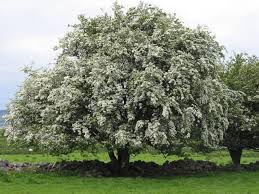
Learners on the Hawthorn Pathway can access a broad and increasingly complex curriculum with adult scaffolding and predictable routines. They are developing independence, regulation, and adaptive communication, and benefit from structured support to engage socially, generalise skills, and navigate learning across contexts.
Learners Needs
| Cognition and Learning |
|---|
|
The cohort can access a broad range of the curriculum when supported with predictable routines and consistent adult scaffolding. The learners access sensorimotor play-based learning to support their understanding of a task. Engagement in learning varies across the day depending on each learner’s regulation, motivation, and interest. Learners are developing independence, self-regulation, and adaptive communication, and can participate in a range of structured learning experiences when provided with the supports they need to regulate and re-engage. They are beginning to generalise emerging skills across contexts and are developing the capacity to apply these skills within functional learning opportunities both in school and the community. Learners benefit from clear routines and transactional supports that enable them to navigate transitions and understand the sequence of their day. Many learners are working within early literacy and numeracy development, with some beginning to apply these skills functionally across varied activities and environments. |
| Communication and Language |
|---|
| Social, Emotional & Mental Health |
|---|
| Physical, Sensory & Physical Health |
|---|
| Independence |
|---|
|
|
Rowan Pathway

Learners on the Rowan Pathway have significant difficulties coping with stress affecting their ability to feel safe within social and academic situations. They manage their stress by avoiding adult directed activities and using their communication and language skills to structure and control their environment and social interactions with adults and peers. This means they often struggle to learn in conventional ways.
Learners Needs
| Cognition and Learning |
|---|
|
This cohort typically exhibits a distinct cognitive and learning style, heavily shaped by their need for autonomy, their perception of demands, and their emotional regulation profile, while every learner is unique. Learning is often inhibited when anything feels like a demand, even if the task is enjoyable or personally meaningful. The learners can attend to learning in play-based manners with modelling from staff rather than demand-based language. However, learning is often pupil-led. Often, they learn best when they feel in control of the pace, method, and environment. A sense of autonomy can dramatically improve engagement, problem-solving, and executive functioning. Pupils demonstrate intense interest-based learning, acquiring in-depth knowledge in their chosen areas. Their learning style may appear “spiky”—with advanced abilities in one domain and difficulty in others, not due to ability but the cognitive demand of a non-chosen area. Imagination is frequently used as both a learning strategy and a regulation strategy, particularly during stressful moments. Learners often have many strengths in reading, writing, and maths, but these skills can be hard to see when they feel pressured or overwhelmed. They may have a great imagination, strong vocabulary, and a good understanding of patterns and logical ideas, especially when learning is connected to their interests. However, they can struggle to start tasks, avoid anything that feels like a demand, and become anxious if they feel they might make a mistake. Their abilities can vary from day to day depending on how safe, calm, and in control they feel. They learn best when activities are low-pressure, flexible, and collaborative, with plenty of choice and opportunities to explore literacy and numeracy in ways that feel natural and enjoyable to them. |
| Communication and Language |
|---|
|
|
| Social, Emotional & Mental Health |
|---|
| Physical, Sensory & Physical Health |
|---|
| Independence |
|---|